
Introduction
Some conversations begin normally and then suddenly take a dramatic turn into deeply personal territory.
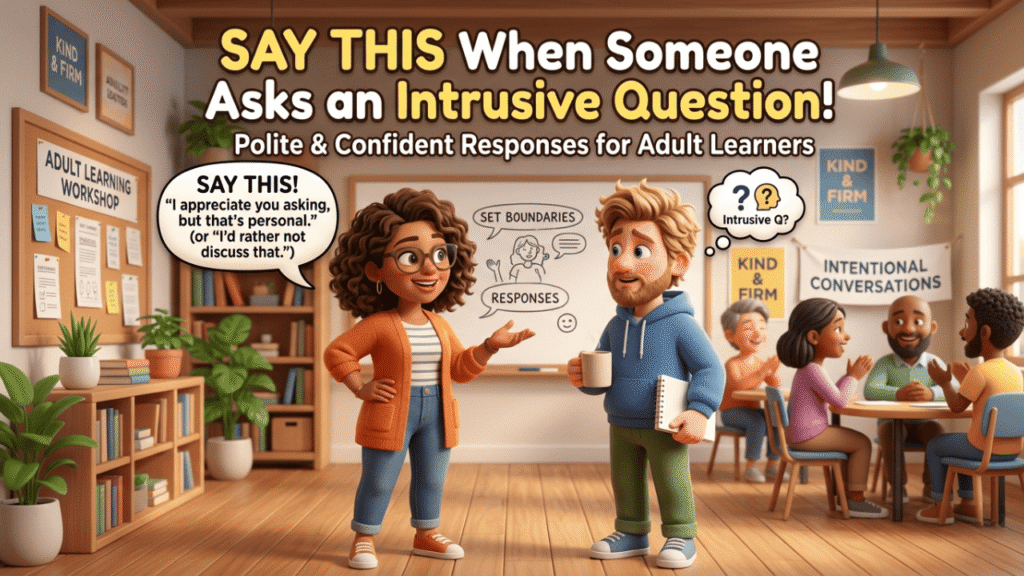
You are casually talking to someone when they suddenly ask:
“How much salary do you earn?”
“Why are you still unmarried?”
“When are you planning to have children?”
“How old are you exactly?”
And in that moment, your brain freezes somewhere between politeness and panic.
Awkward social situations like these happen everywhere. Sometimes, the person asking the question does not even realise they are making someone uncomfortable. They may simply be overly curious, too friendly, emotionally unaware, or socially overconfident.
That is why learning Everyday English Phrases for awkward situations is incredibly important.
Real communication is not just grammar and vocabulary. It is also about setting boundaries politely, reacting naturally, and protecting your comfort without sounding aggressive.
The latest Flair For Words video explores this exact type of situation through humorous sitcom-style storytelling. An elderly woman becomes overly friendly with a man she knows and starts asking personal questions that slowly become uncomfortable. The situation is awkward, relatable, and funny at the same time, exactly the kind of moment people remember because it feels emotionally real.
This style of learning helps viewers improve their Daily use of English words with meaning naturally. Instead of memorising isolated definitions, learners experience vocabulary through expressions, reactions, emotions, and realistic conversations.
If you enjoy learning:
• English words with meaning
• Basic English words with meaning
• vocabulary words with meaning
• natural spoken English
Then this article will help you understand how Everyday English Phrases actually function in real life.
Because true fluency is not about sounding robotic.
It is about knowing what to say when conversations become socially uncomfortable.
Table of Contents
About Flair for Words
Flair For Words started as a vocabulary-focused YouTube channel that explained one useful English word every day through short and engaging videos. Gradually, the content expanded into IELTS speaking preparation, spoken English guidance, and conversational English practice.
Now the channel has evolved into something more entertaining and emotionally relatable.
The latest videos combine Everyday English Phrases with sitcom-like storytelling inspired by real-life awkward moments. Instead of teaching vocabulary mechanically, the channel places words inside funny and uncomfortable social situations that viewers instantly recognise.
The result feels educational without becoming boring.
Even viewers who are not intentionally trying to study English often continue watching because the situations feel relatable, humorous, and emotionally authentic.
At the same time, learners naturally improve their Daily use of English words with meaning because the vocabulary appears in realistic conversations rather than textbook examples.
That emotional connection makes the language easier to remember.
Why Everyday English Phrases Matter in Real Conversations
Many English learners know grammar rules perfectly but still feel nervous during real conversations.
Why?
Because real conversations are unpredictable.
People interrupt. They ask personal questions. They misunderstand tone. They become too friendly too quickly. They cross social boundaries without noticing.
And textbook English rarely prepares learners for these moments.
That is why mastering Everyday English Phrases is essential.
These expressions help you:
• sound natural
• protect personal boundaries politely
• handle awkward situations calmly
• improve conversational confidence
• understand emotional communication
• speak more fluently during IELTS Speaking
The more familiar you become with Everyday English Phrases, the easier everyday communication becomes.
Now, let us explore the vocabulary from the video.
1. INTRUSIVE (Adjective)
📖 IPA: /ɪnˈtruːsɪv/
🔊 Pronunciation (Hindi – Devanagari): इंट्रूसिव
💡 Meaning (Simple): Asking or doing things that feel too personal or uncomfortable.
💡 Meaning (In a sentence): When someone is intrusive, they cross personal boundaries by asking private questions or interfering too much in another person’s life.
📝 अर्थ (Hindi): जरूरत से ज्यादा दखल देने वाला या निजी मामलों में हस्तक्षेप करने वाला
📌 Collocations: intrusive question, intrusive behavior, intrusive comments, emotionally intrusive
⚡ Preposition / Pattern: intrusive toward someone
🎭 Formality: This word is common in spoken English, workplace conversations, emotional discussions, and IELTS Speaking answers related to social situations. It sounds natural in both conversational and semi-formal contexts.
Examples
• That question felt a little intrusive.
• Some people become intrusive without realising it.
• She asked several intrusive questions at dinner.
• Social boundaries exist to prevent intrusive behavior.
• Even friendly people can accidentally sound intrusive.
Among modern Everyday English Phrases, this word is extremely useful because personal boundaries matter in every culture.
2. TO COME ON TOO STRONG (Phrase)
📖 IPA: /kʌm ɒn tuː strɒŋ/
🔊 Pronunciation (Hindi – Devanagari): कम ऑन टू स्ट्रॉन्ग
💡 Meaning (Simple): To behave too intensely or too personally too quickly.
💡 Meaning (In a sentence): When someone comes on too strong, they overwhelm others by becoming overly emotional, overly friendly, or too personal before enough comfort or trust exists.
📝 अर्थ (Hindi): जरूरत से ज्यादा तेज़ या अत्यधिक व्यक्तिगत व्यवहार करना
📌 Collocations: come on too strong emotionally, come on too strong socially, come on too strong during conversation, accidentally come on too strong
⚡ Preposition / Pattern: come on too strong with someone
🎭 Formality: This phrase is extremely common in spoken English, dating conversations, social discussions, and storytelling. Avoid overusing it in highly formal academic writing.
Examples
• She was trying to be friendly but came on too strong.
• Sometimes people ask personal questions because they come on too strong socially.
• He came on too strong during the first conversation.
• Overenthusiasm can occasionally come on too strong.
• Good intentions sometimes create awkward situations.
This is one of those Everyday English Phrases that perfectly captures socially awkward interactions.
3. PUSHY (Adjective)
📖 IPA: /ˈpʊʃi/
🔊 Pronunciation (Hindi – Devanagari): पुशी
💡 Meaning (Simple): Forcing people too much or not respecting boundaries.
💡 Meaning (In a sentence): A pushy person keeps pressuring others for answers, attention, or agreement even when the other person feels uncomfortable.
📝 अर्थ (Hindi): ज़बरदस्ती करने वाला या बहुत दबाव डालने वाला
📌 Collocations: pushy behavior, pushy salesperson, pushy questions, emotionally pushy
⚡ Preposition / Pattern: pushy about something
🎭 Formality: This word is widely used in spoken English and conversational situations. It is common in workplace discussions, social situations, and IELTS Speaking topics about personality.
Examples
• He became pushy after she avoided the question.
• Some people do not realise they sound pushy.
• Pushy conversations make people uncomfortable quickly.
• She was being friendly, not intentionally pushy.
• Asking once is curiosity, asking repeatedly becomes pushy.
Learning such expressions improves your understanding of Basic English words with meaning naturally.
4. TO BACK OFF (Phrasal Verb)
📖 IPA: /bæk ɒf/
🔊 Pronunciation (Hindi – Devanagari): बैक ऑफ
💡 Meaning (Simple): To stop being aggressive, intrusive, or too involved.
💡 Meaning (In a sentence): When someone backs off, they reduce pressure, give space, or stop pushing another person emotionally or socially.
📝 अर्थ (Hindi): पीछे हट जाना या दबाव कम करना
📌 Collocations: back off politely, back off immediately, back off emotionally, tell someone to back off
⚡ Preposition / Pattern: back off from something
🎭 Formality: This phrasal verb is highly common in spoken English and informal conversations. It works naturally in emotional discussions and social situations.
Examples
• She realised the question was personal and backed off.
• Sometimes people need a gentle signal to back off.
• He finally backed off after noticing her discomfort.
• You can stay polite while asking someone to back off.
• Social awareness helps people know when to back off naturally.
This is one of the most practical Everyday English Phrases for handling uncomfortable situations politely.
Why Awkward Social Situations Help English Learning
Interestingly, awkward conversations are often excellent learning tools.
Why?
Because emotions improve memory.
People forget random vocabulary lists quickly, but they remember conversations that made them uncomfortable, embarrassed, nervous, or amused.
That emotional connection strengthens language retention naturally.
This is exactly why sitcom-style learning works so well for Everyday English Phrases.
You do not just memorise definitions.
You remember:
• the uncomfortable silence
• the intrusive question
• the nervous smile
• the polite attempt to escape
• the moment someone finally backs off
And that emotional memory helps vocabulary stay in your mind longer.
How Everyday English Phrases Improve IELTS Speaking
Many IELTS learners sound overly formal because they memorise perfect textbook answers.
Real fluency sounds more human.
Native speakers constantly use conversational expressions to manage:
• discomfort
• awkwardness
• boundaries
• politeness
• emotional reactions
Using Everyday English Phrases naturally makes your speaking feel more conversational and emotionally authentic.
Examiners notice natural communication patterns immediately.
That does not mean forcing idioms into every sentence.
It means using expressions comfortably and appropriately.
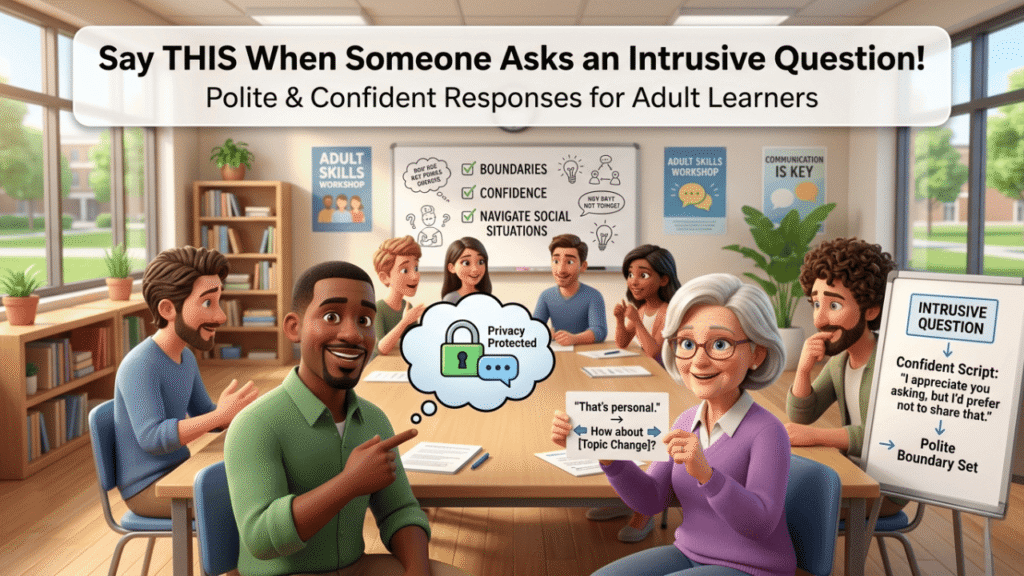
How to Respond Politely to Intrusive Questions
Almost everyone experiences intrusive questions.
Here are some polite conversational strategies:
Change the Topic
“That’s a long story. Anyway, how have you been lately?”
Use Humor
“If I answer that, I might need legal protection afterwards.”
Give a Short Answer
“Nothing exciting, honestly.”
Set a Gentle Boundary
“I’m a little private about that, actually.”
Smile and Redirect
“Let’s talk about something less dangerous.”
These conversational strategies improve your confidence during Everyday English Phrases practice.
Why Humor Makes Vocabulary Easier to Remember
Humor reduces learning pressure.
When people laugh, they relax emotionally. That relaxed state makes vocabulary easier to absorb naturally.
This is why the Flair For Words sitcom-style approach works beautifully.
Viewers enjoy:
• relatable awkwardness
• expressive reactions
• emotional realism
• funny misunderstandings
• conversational English
And without realising it, they strengthen their Daily use of English words with meaning at the same time.
Practical Ways to Learn Everyday English Phrases Faster
If you genuinely want to improve your Everyday English Phrases, try these techniques consistently.
Watch Conversational Content
Sitcoms and realistic YouTube videos expose you to natural communication.
Repeat Expressions Aloud
Speaking vocabulary aloud improves fluency dramatically.
Observe Real People
Notice how people react when conversations become awkward.
Practice Boundary Responses
Learning polite responses builds confidence.
Stop Fearing Awkwardness
Awkward moments are often the best teachers.
Conclusion
Social conversations are rarely perfect.
Sometimes people ask intrusive questions. Sometimes someone comes on too strong. Sometimes conversations become pushy without bad intentions. And sometimes the healthiest thing to do is politely ask someone to back off.
These moments are uncomfortable, but they are also deeply human.
That is why learning through Everyday English Phrases feels so effective.
The expressions covered today are not just vocabulary items. They are emotional tools that help people navigate real-life communication naturally and confidently.
And once you begin recognising these patterns in everyday conversations, your English starts sounding more authentic, expressive, and emotionally fluent.
Because true fluency is not about memorising perfect grammar forever.
It is about knowing what to say when real human conversations become awkward.
Other topics you may like: 5 Surprisingly Powerful Everyday English Expressions That Save Embarrassing Conversations
FAQs
1. What are the best Everyday English Phrases for handling intrusive questions?
Expressions like “back off,” “come on too strong,” and “intrusive” are extremely useful during uncomfortable social situations.
2. How can I improve Everyday English Phrases naturally?
Watch conversational content, practice realistic dialogues, and learn vocabulary through emotional and relatable situations instead of memorising isolated words.
3. Why are Everyday English Phrases important for spoken English?
They help conversations sound natural, emotionally expressive, and socially appropriate during real communication.
Pingback: 3 Surprisingly Everyday English Communication Mistakes